
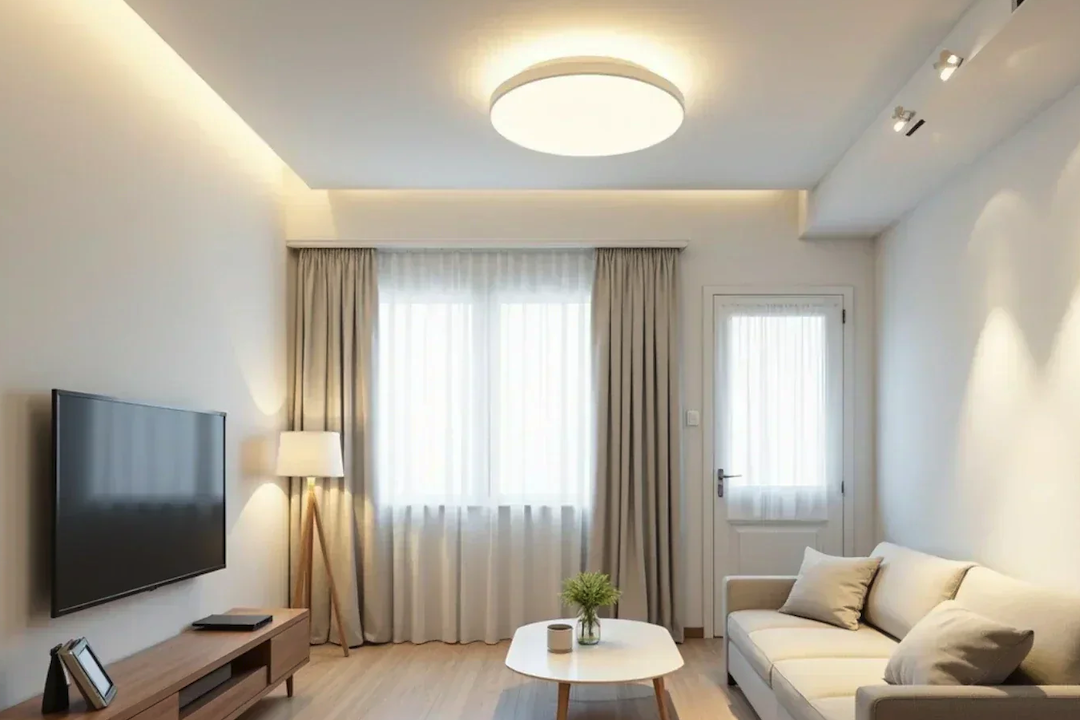
So, you’ve got a home with a ceiling that feels a bit… snug? Maybe it’s one of those stylish modern builds with deliberately lower-than-average heights, or perhaps an older house that’s been renovated. Whatever the reason, the thought of bulky light fixtures hanging down, making the space feel even smaller, is probably a bit of a turn-off. You’re wondering if there’s a lighting solution that won’t cramp your style or your headspace. Good news – the ultra-thin ceiling light is often just the ticket. These fixtures are designed to blend seamlessly, offering excellent illumination without eating up precious vertical space, making them a practical choice for homes where every inch counts.
When we talk about “ultra-thin” ceiling lights, we’re referring to light 1homedesign fixtures specifically engineered to have a minimal profile. Unlike traditional ceiling lights that might have a substantial depth, these are designed to sit as close to the ceiling surface as possible. Think of them as a sleek, flat disc or a shallow square that mounts flush, rather than a domed or pendant style that extends downwards.
The Core Design Principle: Minimalism
The defining characteristic of an ultra-thin ceiling light is its focus on a low profile. The internal components, like the LED driver and the light source itself, are packed into a very shallow housing. This isn’t about cutting corners on brightness or features; it’s about clever engineering and design to achieve a discreet and unobtrusive look.
Materials Matter for Slimness
The materials used play a key role. Many ultra-thin lights feature durable yet lightweight polymerdiffusers instead of thick glass. The housing itself is often made from thin metal like aluminum, which is both strong and can dissipate heat effectively even in a confined space.
LED Technology is Essential
It’s pretty much impossible to have an ultra-thin ceiling light without LED technology. LEDs are inherently more compact and produce less heat than older lighting technologies like incandescent or fluorescent bulbs. This allows manufacturers to design much leaner fixtures because they don’t need the bulky housings or ventilation systems that older bulb types require.
Beyond Just “Thin”: Functional Depth
While the “ultra-thin” aspect is about minimizing downward projection, it’s also important to understand what “depth” means in this context. It’s not just about the thickness of the fixture itself.
Flush Mount vs. Recessed
Most ultra-thin ceiling lights are designed for flush mounting, meaning they sit directly against the ceiling surface. This is in contrast to recessed lighting, which sits within the ceiling cavity. While recessed lighting also saves vertical space, flush-mounted ultra-thin lights are often easier to install in existing ceilings without needing to cut large holes, making them a more accessible option for many.
Understanding the “Profile”
When you’re looking at specifications, you’ll see a “profile” or “thickness” measurement. This is the crucial number that tells you how much the fixture will extend downwards from the ceiling. For a genuinely ultra-thin light, this will typically be no more than a couple of inches, and often even less.
Why Ultra Thin Lights Shine in Low-Ceiling Environments
The primary reason ultra-thin ceiling lights are a standout choice for homes with restricted ceiling height is straightforward: they don’t take up valuable headroom. This has a ripple effect on the entire feel and usability of a room.
Maximizing Perceived Space
One of the biggest psychological impacts of low ceilings is that they can make a room feel smaller and more confined. By opting for ultra-thin lighting, you eliminate a significant visual obstacle that would otherwise draw the eye downwards and emphasize the low ceiling.
The Illusion of Height
When a light fixture is practically fused with the ceiling, it allows the eye to travel upwards more freely. This creates an illusion of greater height, making the room feel more open, airy, and spacious. It’s a simple design trick that can profoundly change the ambiance of a space.
Avoiding the “Bump-Your-Head” Factor
This is the most practical benefit. In rooms with low ceilings, especially in hallways, kitchens, or bedrooms, a standard ceiling light can become a hazard. You might find yourself constantly ducking or worried about bumping your head. Ultra-thin lights sit high, effectively removing this risk and making the room safer and more comfortable to move around in.
Preserving Architectural Lines
Modern homes often feature intentional design elements, and low ceilings can be part of that aesthetic. Bulky light fixtures can disrupt these clean architectural lines. Ultra-thin lights are designed to complement, not compete with, the existing design.
Minimal Visual Clutter
In minimalist or contemporary interiors, less is often more. An ultra-thin ceiling light contributes to this by providing light without adding visual weight or clutter to the ceiling. It integrates seamlessly, allowing the overall design of the room to take center stage.
Suitable for Specific Areas
Think about tight corners, narrow hallways, or basements. These are often areas where ceiling height is at a premium. An ultra-thin light is the ideal solution here, providing necessary illumination without making these already compact spaces feel even more cramped.
Key Features to Look For in an Ultra Thin Ceiling Light
When you’re shopping around, it’s easy to get lost in a sea of options. Knowing what specific features to prioritize will help you narrow down your choices and ensure you get a light that’s not only thin but also functional and looks good.
Brightness and Brightness Control
Just because a light is thin doesn’t mean it has to be dim. Modern ultra-thin lights, especially those with LEDs, can offer significant brightness.
Lumens: The Actual Measure of Light
Don’t just look at wattage. Lumens are the actual measure of light output. For general room lighting, you’ll want a fixture that provides enough lumens for the size of the room. A small bathroom might need 800-1000 lumens, while a larger living area could require 2000+ lumens.
Dimmability for Versatility
This is a huge plus, especially in rooms where you might want different lighting moods. A dimmable ultra-thin ceiling light allows you to adjust the brightness for task lighting, ambient lighting, or a softer glow in the evening. Make sure to check if the dimmer switch you have or plan to install is compatible with the fixture.
Color Temperature and Quality
The color of the light (warm to cool) can significantly affect the atmosphere of a room. For ultra-thin lights, you’ll find a range of options.
Warm White vs. Cool White
- Warm White (around 2700K-3000K): This is a soft, yellowish light, similar to traditional incandescent bulbs. It’s great for creating a cozy and inviting atmosphere, often preferred in living rooms and bedrooms.
- Cool White/Daylight (around 4000K-6500K): This is a brighter, bluish-white light that mimics natural daylight. It’s good for task-oriented areas like kitchens or home offices, promoting alertness.
CRI (Color Rendering Index)
This is a measure of how accurately the light source reveals the colors of objects compared to a natural light source. A higher CRI (ideally 90+) means colors will look more true to life, which is important for aesthetics and for differentiating objects accurately.
Design and Aesthetics
Even though they are discreet, the design still matters. You want it to blend in or subtly enhance the room.
Shapes and Finishes
Ultra-thin lights come in various shapes – most commonly round discs, but also squares, rectangles, and sometimes even more decorative minimalist designs. Finishes are usually neutral like white, black, brushed nickel, or chrome, to blend with most decor styles.
Diffuser Material
The diffuser is the part that spreads the light. Frosted acrylic or polycarbonate are common for their durability and ability to create a soft, even glow. Some higher-end models might use very thin, frosted glass.
Energy Efficiency and Lifespan
Thanks to LED technology, ultra-thin ceiling lights are typically very energy-efficient and long-lasting.
LED Power Consumption
LEDs use significantly less energy than older bulb types, which translates to lower electricity bills. You’ll often see an “equivalent wattage” listed, which tells you how bright it is compared to an older bulb, and the actual wattage, which is how much power it consumes.
Longevity of LEDs
LEDs have an incredibly long lifespan, often rated for tens of thousands of hours. This means you won’t be replacing bulbs anytime soon, which is a big convenience for fixtures that might be harder to access for bulb changes.
Installation Considerations for Ultra Thin Ceiling Lights
While generally easier to install than recessed lights, there are still a few things to keep in mind to ensure a smooth and safe installation process.
Direct Wiring vs. Plug-in (Less Common)
Most ultra-thin ceiling lights are designed to be hardwired directly into your home’s electrical system. This provides a clean, permanent solution.
Professional Installation Recommended
For most people, especially if you’re not comfortable with electrical work, it’s best to hire a qualified electrician. They have the tools, knowledge, and ensure the wiring is safe and up to code, which is especially important when dealing with low ceilings where access might be trickier.
DIY Considerations
If you are experienced with electrical wiring, here are some points:
- Power Off: Always make sure the power to the circuit you’re working on is completely switched off at the breaker box. Double-check with a voltage tester.
- Mounting Bracket: The fixture will come with a mounting bracket that attaches to your ceiling’s junction box (if present). Ensure it’s securely fastened.
- Wiring Connections: Follow the manufacturer’s instructions carefully for connecting the wires (usually black to black, white to white, and ground to the grounding wire).
- Securing the Fixture: Once wired, the thin fixture will typically twist or snap onto the mounting bracket.
Ceiling Structure and Support
The weight of the fixture is usually not an issue with ultra-thin lights, but the mounting surface is important.
Junction Box Compatibility
The light will attach to a standard electrical junction box in your ceiling. If you don’t have one, an electrician will need to install one. Ensure the junction box is rated to support the weight of the fixture, though for these lights, it’s rarely an issue.
Drywall vs. Plaster
The method of attachment and the potential need for reinforcement might vary slightly depending on whether your ceiling is drywall or plaster. Again, an electrician will be familiar with these nuances.
Fixture Size and Placement
Even though the fixture is thin, its diameter or footprint on the ceiling still matters.
Spacing in Small Rooms
In very small rooms, you might only need one central fixture. In slightly larger rooms or hallways, you might consider two smaller ultra-thin lights for more even illumination. Avoid placing lights too close to walls, as this can create harsh shadows.
Avoiding Obstructions
Ensure the chosen location doesn’t interfere with ceiling fans, vents, or other ceiling-mounted items. Measure carefully to ensure the fixture fits comfortably within the available space.
Where to Use Ultra Thin Ceiling Lights in Your Home
The versatility of ultra-thin ceiling lights means they aren’t confined to just one type of room or house. Their benefits can be leveraged in many areas.
Hallways and Entryways: Maximizing Flow
These are often the narrowest and lowest-ceilinged spaces in a home. Ultra-thin lights are perfect here.
Welcoming Light
A bright, welcoming light in the entryway sets a positive tone. An ultra-thin fixture provides this without making the entrance feel cramped.
Navigational Safety
In longer hallways, good illumination helps with safe navigation, especially at night. You don’t want to risk stubbing toes or bumping into walls because of poor lighting.
Kitchens: Bright and Efficient Task Lighting
Modern kitchens, especially in apartments or older homes, can have lower ceiling heights.
Under-Cabinet Lighting Complement
While under-cabinet lighting is crucial for task areas at the counters, an ultra-thin ceiling light can provide excellent general illumination for the rest of the kitchen space.
Easy to Clean
Many ultra-thin lights have smooth, sealed designs, making them easy to wipe down, which is a bonus in a grease-prone area like the kitchen.
Bedrooms: Creating a Relaxing Atmosphere
While maybe not as commonly thought of as a “low ceiling” area, bedrooms can benefit architecturally from less obtrusive lighting.
Soft Ambiance
When paired with dimmable controls and a warm color temperature, an ultra-thin light can create a soft, relaxing ambiance ideal for sleep and relaxation.
Avoiding the “Shadow Ceiling” Effect
If you have a bed positioned directly underneath a light fixture, an overly deep one can cast unflattering shadows. A flush-mounted, thin fixture minimizes this.
Bathrooms: Moisture Resistance and Sleekness
Many bathrooms, especially powder rooms or en-suites, have lower ceilings.
Moisture-Rated Options
Look for “damp-rated” or “wet-rated” fixtures if the light will be installed in a bathroom where it might be exposed to steam or splashes. This is crucial for safety and durability.
Clean and Modern Look
Ultra-thin lights contribute to a clean, modern aesthetic that’s often desired in bathrooms.
Basements and Garages: Functional Illumination Without Sacrificing Headroom
These are prime candidates for ultra-thin lighting. Many basements have standard or even lower ceilings, and garages are often utilitarian spaces where every inch of headroom matters for storage or vehicle clearance.
Practicality Over Aesthetics
In these functional spaces, the primary goal is often good, practical light. Ultra-thin fixtures deliver this without creating a feeling of oppression.
Easy to Install Post-Renovation
If you’re finishing a basement or converting a garage, an ultra-thin light is an easy way to add significant lighting without complex ceiling work.
Comparing Ultra Thin Lights to Other Low-Profile Options
It’s helpful to understand how ultra-thin ceiling lights stack up against other popular choices for minimizing visual intrusion.
Ultra Thin vs. Recessed Lighting
The most common comparison is often with recessed lighting (downlights).
Installation Difference
- Ultra Thin: Mounts flush on the ceiling surface, typically to an existing junction box. Easier to install in many situations, especially if you don’t want to cut large holes.
- Recessed: Sits within the ceiling cavity, requiring a hole to be cut in the ceiling and often special housing installed between joists. Can provide a very clean, invisible look but is more intrusive to install.
Visual Impact
- Ultra Thin: Still visible as a fixture, but its low profile minimizes its impact. Offers a soft, diffused light.
- Recessed: Nearly disappears into the ceiling, providing a very minimalist aesthetic. Light can be more focused or spread depending on the trim.
Cost
- Ultra Thin: Generally more affordable for the fixture itself and installation costs can be lower if a junction box is already present.
- Recessed: Fixtures can be more expensive, and professional installation is almost always recommended due to the need for cutting into the ceiling structure.
Ultra Thin vs. Track Lighting
Track lighting offers flexibility but can also be visually dominant.
Visual Dominance
- Ultra Thin: Designed to be discreet and blend into the ceiling.
- Track Lighting: The track itself is visible on the ceiling, and the individual light heads can extend downwards. While adjustable, it’s a more prominent feature.
Flexibility
- Ultra Thin: Fixed light output and direction. Changing to a different light source means replacing the fixture.
- Track Lighting: Highly flexible. You can reposition and change the direction of individual lights, and replace heads with different styles or beam angles.
Application
- Ultra Thin: Best for general ambient light where a consistent, diffused glow is desired.
- Track Lighting: Excellent for accent lighting, highlighting artwork, or providing focused task lighting in specific areas.
Ultra Thin vs. Small Pendant Lights
While pendant lights can be stylish, their downward projection is their main drawback in low-ceiling scenarios.
Downward Projection
- Ultra Thin: Minimal downward projection, ideal for saving headroom.
- Small Pendant Lights: Even small pendants will hang down a noticeable distance, which can be problematic in low-ceilinged rooms.
Aesthetic Goal
- Ultra Thin: To provide light discreetly and make the space feel larger.
- Small Pendant Lights: Often used as decorative elements, to add a “statement” or to define a specific zone (like over a small dining table).
In summary, if your primary concern is maximizing usable headroom and creating an open feel in a room with low ceilings, the ultra-thin ceiling light offers a highly practical and effective solution. It’s about smart design meeting everyday needs, providing the light you need without compromising your space.
